Introduction
Two people can look in the mirror and say the same thing, and
“My teeth are misaligned.”
but maybe you have a front tooth knocked out of place.
The other might have teeth fighting for too little space.
A third person may have more or less straight teeth but notice that, when biting, the upper and lower teeth don’t fit together comfortably.
From the patient’s perspective, all three situations can feel like a teeth-straightening problem.
They are totally different problems in terms of treatment.
It’s easy to overlook this distinction when orthodontics is presented as simply a choice between braces and something else. Patients usually ask, “Which treatment is faster, less obvious, more convenient?” Those are fair questions, but they are preceded by a more important one:
What really needs to change?
The position of the teeth, the amount of available space, the bite relationships, oral health, and the anticipated function of the smile after treatment are all considered in planning orthodontic treatment. The appliance is a tool in that plan, not the plan itself.
Knowing this difference will make it much easier to compare treatment options when you’re looking up orthodontics in Gallup, NM,
In this guide, we’ll look at common orthodontic treatments and explore their different aspects.
Before Choosing a Treatment, You Need to Know What Actually Needs to Move
Most people judge tooth alignment from the front.
That makes sense.
You smile in the mirror and notice one tooth sitting farther forward. You see overlap between two lower teeth. Perhaps there is a gap that catches your attention in every photograph.
A gap can develop for several reasons, and orthodontic planning may involve determining how to close the spaces and how the final tooth positions will relate to one another.
Depending on the individual case, orthodontic concerns may involve:
- Excessive overlap of upper and lower teeth
- Front teeth that do not meet as expected
- Upper and lower dental arches that relate unevenly
- Teeth that contact in an unfavorable pattern
How Is an Orthodontic Treatment Plan Developed?
1. Initial Consultation
The process begins with a discussion of the patient’s concerns. Some patients want to fix visible crowding. Others worry about gaps, bite comfort, or changes that have evolved over time.
2. Teeth & bite check
The dentist will assess the teeth’s position, spacing, crowding, bite relationships and overall oral health. Planning may also be affected by the condition of existing teeth and gums.
3. Record of diagnosis
Photographs, digital scans, X-rays or other records may be collected as appropriate. They provide information that is not always obtainable from visual examination alone.
4. Recommended treatment
The dentist reviews the results and discusses appropriate options. The recommendation should be based on the required movements, not the patient’s preferred appliance.
5. Active observation and therapy
Once treatment is initiated, progress is monitored through scheduled visits. Depending on the orthodontic method, adjustments or new trays may be used.
6. Retention
Retainers help to maintain the new alignment after the active movement phase. To protect the result over time, the retention instructions must be followed.
At A Glance
| Who Qualifies? | Patients with stained teeth or those who require aesthetic improvements are ideal candidates for the treatment. |
| Process Overview | Step 1 An orthodontic treatment generally starts with a visit to your nearest dentist. Step 2 The process is followed by an examination, during which the dentist will check whether you qualify for the treatment. Step 3 After treatment, it’s best to follow the care tips for a quick recovery. |
| Timeline | The timeline for your treatment depends on your chosen orthodontic option. |
| Aftercare | Follow your dentist’s aftercare suggestions for faster recovery. |
| Location & Contact | Sundance of Gallup1601 S 2nd St, Gallup, NM 87301, United States |
Benefits of Orthodontic Treatment
Improves Crowded Teeth Position
Teeth that are crowded may overlap, rotate, or lie outside the ideal position. Orthodontic treatment directs controlled movement based on the available space and the treatment plan. If you want teeth straightening in Gallup, NM, it can help with crowding, so your smile looks less visually crowded and has a more organized arrangement of teeth.
Closes Unwanted Holes
Some patients are most concerned about visible spaces between teeth. Orthodontic treatment can move selected teeth in a planned direction to correct spacing as needed. It’s not just about pushing two teeth together. The dentist is considering how the surrounding teeth and overall bite will relate to each other after movement.
Make Everyday Cleaning More Manageable
Tight, overlapping teeth can create areas that are hard to reach with a toothbrush or floss. Although having straight teeth doesn’t mean that you can stop practicing good oral hygiene, better positioning can make it easier to reach and clean certain surfaces in a typical home-care routine.
Helps in Better Bite Relationships
Orthodontic treatment may be more than what you see in a photo of a smile. Depending on the case, the plan may also consider the way the upper and lower teeth come together. It may be possible to improve certain bite relationships to help create a more balanced function, but the specific goals and possibilities are determined by the patient’s individual anatomy and needs.
Alternative treatment options exist
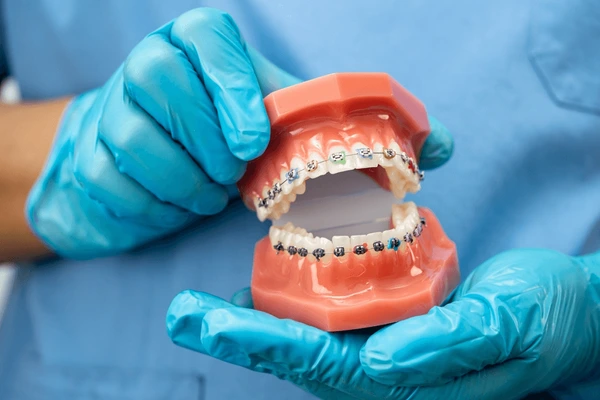
Today’s orthodontics is not about using one appliance for every patient. While clear aligners may be suitable for some cases and lifestyles, traditional braces in Gallup, NM, still have their place. Having a variety of tools available allows for a conversation about treatment that is clinically appropriate but also considers practical preferences where possible.
Can Enhance Confidence in the Smile
Some patients may hesitate to smile freely due to a rotated tooth, a noticeable gap, or a crowded area. These concerns can be addressed with orthodontic treatment through planned movement rather than by covering the natural teeth. Gradual improvement is one of the most personally rewarding aspects of treatment for many patients.
Orthodontic Care at Sundance Dental in Gallup
When patients call about orthodontics, they often already have an appliance in mind.
“Some ask for braces, others ask about clear aligners right away.”
Some just know that a corner of their smile has bothered them for years.
The useful first step is to check whether the treatment of choice fits the actual orthodontic problem.
Sundance Dental Gallup orthodontics offers an orthodontic evaluation that considers tooth position, crowding, spacing, bite relationships, oral health, and individual treatment goals before discussing options. This way, you create a plan based on what needs fixing rather than starting with a pre-selected appliance.
FAQs
1. What kinds of orthodontics does Gallup, NM have to offer?
Treatment can range from traditional braces to clear aligners and other approaches specific to the case, the dental practice, and the patient. The right choice depends on crowding, spacing, bite relationships, age, oral health, and the type of tooth movement needed.
2. Do braces work better than clear aligners?
There is no single best treatment that will work for every patient. Braces control tooth movement and help address many orthodontic problems, but in some cases, clear aligners may be more suitable for the patient’s lifestyle. An evaluation can help you see which option will realistically address the specific movements your teeth need.
3. How long does it take to straighten teeth?
Treatment time varies greatly depending on the complexity of the case, the amount and type of movement required, the appliance used, and the patient’s cooperation. Limited concerns may take less time, and the treatment to straighten teeth in Gallup, NM can take much longer. An examination gives a more useful estimate.
4. Can adults have orthodontic treatment?
Sure. Adults may seek orthodontic treatment for crowding, spacing, tooth position, and some bite problems. Crowns, fillings, missing teeth, gum health, and prior dental work are all factors that influence the planning, so a thorough assessment is necessary before any treatment begins.
5. What is the cost of orthodontic treatment in Gallup, NM?
Brace costs depend on the complexity of treatment, expected treatment duration, type of appliance, and individual clinical needs. To get an accurate estimate, you’ll need to have a consultation, because a patient who needs minor alignment changes may have a very different treatment plan than someone who needs comprehensive correction.
Conclusion
Orthodontic treatment becomes easier to understand once the conversation moves beyond a simple question:
Braces or something else?
The more useful question is: What actually needs to move?
A rotated tooth presents a different challenge from generalized crowding. Several gaps require different planning from a lack of space. A smile that appears fairly straight from the front may still have bite relationships that deserve closer evaluation.
Remember, orthodontic treatment is about understanding the movement first, then choosing the right tool to achieve it. Book a call with our experts at Sundance Dental today!